Make-Ahead Pub Desserts: A Practical Guide
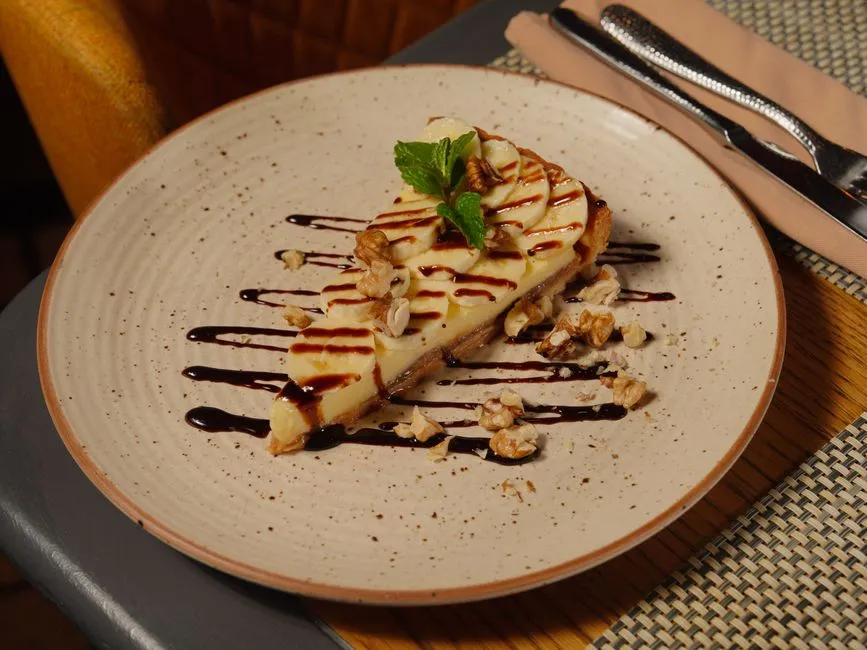
The best pub desserts for making ahead
The easiest pub desserts to make ahead are sticky toffee pudding, bread and butter pudding, fruit crumble, and treacle tart. They tolerate an overnight rest and can be warmed without losing the thing that makes them good. Pouring custard can also be made ahead if it is chilled promptly and reheated gently. Eton mess is different: prepare the meringue, fruit, and cream separately, then combine them just before serving.
The useful question is not simply, "Can I make it early?" It is, "Which stage should I stop at?" A baked sponge benefits from being finished and covered. A crumble stays crisper when its fruit and topping wait separately. Meringue loses its crunch once it meets wet fruit and cream. The right pause point saves work without asking the dessert to survive the wrong conditions.
| Pub dessert | Best make-ahead stop | What happens on serving day | Main quality risk |
|---|---|---|---|
| Sticky toffee pudding | Bake cake and cook sauce separately | Reheat portions and sauce, then combine | Sauce soaking the cake into a wet layer |
| Bread and butter pudding | Assemble and chill overnight, or bake fully | Bake from chilled as the recipe directs, or reheat once | Dry edges around a cold centre |
| Apple and blackberry crumble | Cook and cool fruit; make topping separately | Assemble cold components and bake | Topping absorbing fruit moisture before baking |
| Treacle tart | Bake fully and cool | Serve at room temperature or warm once | Soft pastry from warm wrapping or condensation |
| Pouring custard | Cook, cool quickly, and cover the surface | Reheat gently while whisking | Scrambled egg from high heat or a skin from exposed cooling |
| Eton mess | Prepare dry meringue and chilled fruit separately | Whip cream and fold together at the last moment | Dissolved meringue and loose cream |
These are planning methods, not universal storage guarantees. The exact recipe, portion depth, ingredients, appliance, and local food-safety guidance still govern the final timing.
Choose a dessert by the work you want at dinner
If you want almost no work after the main course, choose treacle tart. Bake it the day before, cool it completely, and store it as its tested recipe directs. It is comfortable at room temperature and needs only plates, cream, or separately prepared custard.
If you want the strongest warm-pudding effect, choose sticky toffee pudding. The cake and sauce are both finished in advance, but keeping them separate protects the crumb. The live recipe makes nine portions in an 8-inch (20 cm) square pan and gives exact reheating instructions.
If oven space is available while people eat, crumble is the best fresh-baked compromise. Prepare the fruit and topping ahead in separate containers. Assemble them cold and bake according to the recipe. The kitchen smells as though you have been working all evening, although the actual serving-day job is tipping one bowl over another.
Bread and butter pudding suits a host who wants to use a stale loaf and has refrigerator space for the baking dish. The bread needs time to absorb the egg-and-milk mixture, so an overnight rest can be part of the method rather than an inconvenience. Use a tested recipe that expressly permits an overnight soak; do not transfer that timing to an unrelated custard formula.
Choose Eton mess when the oven is occupied by the main course or the weather calls for something cold. Most of the work can happen early, but the final mixing cannot. Keep crisp meringue dry and airtight, keep prepared fruit chilled, and do not fold either into cream until the table is ready.
Count portions before choosing the pan
Start with the number of guests, then divide by the tested yield of the recipe and round up to a whole batch. For 14 guests and a pudding that yields nine portions, 14 divided by 9 is 1.56, so make two complete batches. That produces 18 stated portions and leaves four portions of margin.
Do not multiply the ingredients and improvise one enormous deep pan unless the recipe gives that pan. Doubling a formula does not double baking time, and doubling the depth can leave a wet centre behind browned edges. Two pans of the tested size are easier to bake, chill, store, and reheat evenly.
For a mixed dessert table, count smaller portions deliberately. If each person may take both crumble and tart, decide the serving size before shopping and use the yields stated by those recipes. "There will be several puddings" is not a quantity. Pan count is.
Also count cold-storage space. A 9-by-13-inch dish that technically fits only after removing three shelves is not a useful overnight plan. Measure the shelf, the lidded container, and the route through the refrigerator door before filling anything with custard.
Use three make-ahead lanes
Lane 1: finish, chill, and reheat
Use this lane for sticky toffee pudding and fully baked bread and butter pudding. Bake completely, cool promptly, cover, and refrigerate. Keep sauces in shallow separate containers. Portioning before reheating usually produces more even heat and lets you warm only what will be served.
Reheat according to the tested recipe and verify the centre, not just the hot edge. The UK Food Standards Agency says leftovers should be reheated until steaming hot throughout and reheated only once. Its guidance also notes that microwave heating can leave cold pockets, so turn or stir food where the structure allows.
Lane 2: prepare components, then bake
Use this lane for crumble. Cook wet fruit filling if the recipe calls for it, then cool and refrigerate it. Mix the topping separately and keep it cold. King Arthur Baking documents that unbaked streusel can be frozen and used on fruit before baking; that supports the component method, not a universal bake time for every crumble.
Assemble just before the dish enters the oven. Cold fruit may need different timing from warm fruit, so follow the recipe's chilled-start direction or use its doneness cues rather than guessing from the clock. The filling should be bubbling in the centre and the topping should be properly browned, not merely beige at the edges.
Lane 3: prepare, hold separately, and assemble
Use this lane for Eton mess and other crisp-plus-creamy desserts. Store fully cooled meringue in an airtight container away from steam. Refrigerate washed and prepared fruit in its own covered container. Whip cream close to service unless a tested recipe specifically provides a longer holding method.
Fold briefly and serve. A few visible streaks of fruit are better than stirring until the meringue disappears. If the dessert must sit on a buffet, make smaller bowls in succession rather than one large bowl waiting in a warm room.
Reheat each texture differently
Warm cake, pastry, and sauce do not respond to the same heat.
- Reheat cake portions covered so the surface does not dry before the centre warms. Add sauce after both components are hot.
- Reheat a whole custard pudding only when the recipe gives a whole-dish method. Individual portions make the centre easier to check.
- Warm tart on a tray without wrapping it tightly in foil. A loose cover can protect an over-browning edge, but trapped steam softens pastry.
- Reheat pouring custard over low heat while whisking continuously. Do not walk away or use high heat. If it has already been reheated once, do not chill and reheat it again.
- Bake crumble as close to serving as the schedule permits. If reheating a fully baked crumble, use the recipe's oven method; a microwave warms fruit quickly but does not restore a crisp topping.
Hot dishes, steam, and hot sugar can burn. Use dry oven gloves, set hot pans on a stable heatproof surface, and keep handles clear of the counter edge. Do not carry a hot dish through a crowded room.
Chill dairy and egg desserts safely
The planning window in this guide uses current UK household guidance for England, Northern Ireland, and Wales. The Food Standards Agency's cooking guidance says cooked leftovers should be cooled and refrigerated within two hours, eaten within 48 hours or frozen, and reheated only once until steaming hot throughout. If you live elsewhere, follow the current authority for your jurisdiction.
Keep the refrigerator at 5°C or below. Use shallow containers for sauce, custard, and fruit filling so heat can leave efficiently. Do not seal a very hot deep pan and place it beside ready-to-eat food; divide the food, cool it promptly, then cover and chill it within the official limit.
Record what the container holds and when it was made. Smell and appearance cannot prove that food is safe. If storage time or temperature is uncertain, discard the dessert rather than treating reheating as a reset button.
Check every ingredient label when cooking for an allergy. Pub desserts commonly contain milk, egg, wheat, and sometimes nuts. Separate tools and ingredients are necessary where cross-contact matters; simply removing nuts from the top does not make a shared batch safe. Ask the affected guest what controls they need before buying ingredients or starting preparation.
Build a day-before schedule
Use this order for a dinner at which dessert follows a high-attention main:
- Before shopping: choose one recipe, confirm its yield, pan, allergen needs, storage space, and exact make-ahead limit.
- The day before: bake or cook the component with the longest cooling time first. Prepare sauces and fruit after the oven work is stable.
- During cooling: transfer sauces or custard to shallow containers. Label every component. Refrigerate within the applicable official limit.
- On serving day: set out the correct number of dishes and spoons. Check that the oven or hob needed for dessert will not conflict with the main.
- Before the main is served: take only the components needed for the next step from the refrigerator. Keep everything else chilled.
- After the main: reheat once, verify the centre is steaming hot where required, add cold or crisp components, and serve immediately.
Write the serving sequence on one line: "cake into oven, sauce onto low heat, cream from fridge, nine bowls out." That is more useful in a busy kitchen than relying on memory while clearing dinner plates.
Fix the common make-ahead failures
If a sponge is dry, it was probably stored uncovered, reheated too long, or reheated without enough protection. Cover portions during warming and add sauce after reheating rather than using sauce to disguise a cold middle.
If crumble topping is damp before baking, it met wet fruit too early or was stored in a humid container. Keep the components separate and cold. If a baked topping has softened, an oven may improve it, but use the recipe's reheating method and watch the fruit filling underneath.
If custard forms lumps, the heat was too high or it was not stirred continuously. Remove it from the heat immediately and whisk. Do not promise that straining will rescue severely curdled custard; make a fresh batch if texture or safe handling is uncertain.
If Eton mess becomes watery, the fruit was very wet, the cream was too loose, or it was assembled too early. Drain excess fruit liquid, whip only to the recipe's stated stage, and combine at service.
If tart pastry softens, it was wrapped warm or held where condensation formed. Cool it fully on a rack before covering. Warm only what you need and avoid repeated temperature cycles.
Sources
- Food Standards Agency, "Cooking your food" - supports the England, Northern Ireland, and Wales cooling, 48-hour leftover, once-only reheating, steaming-hot, and microwave cold-pocket guidance. Accessed September 4, 2026.
- Food Standards Agency, "Food poisoning" - supports refrigerator temperatures below 5°C, hygiene, cross-contamination prevention, and the warning that harmful bacteria cannot reliably be detected by smell or taste. Accessed September 4, 2026.
- King Arthur Baking, "Streusel is the secret weapon you can stash in your freezer" - supports freezing unbaked streusel and applying it to fruit before baking; no universal crumble timing is inferred. Accessed September 4, 2026.