Sticky Toffee Pudding With Warm Date Cake
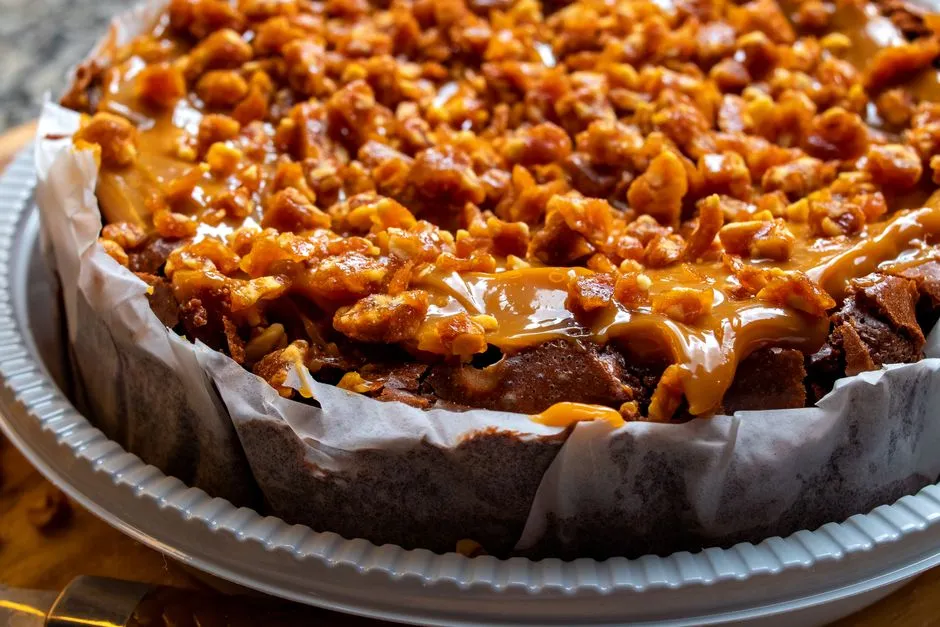
- A warm date cake with an unreasonable work ethic
- Ingredients for nine portions
- Prepare the pan and date mixture
- Mix the batter without beating it tough
- Bake to moist crumbs, not a wet streak
- Make the toffee sauce
- Sauce the cake at the right moment
- Make-ahead schedule
- Storage and freezing
- Pan substitutions
- Ingredient substitutions with limits
- Troubleshooting the finished pudding
- A full pub-style finish
A warm date cake with an unreasonable work ethic
Sticky toffee pudding is a soft date cake served warm with buttery toffee sauce. This version fills an 8-inch (20 cm) square pan and makes nine portions. The dates are soaked in boiling water with baking soda, then folded into a brown-sugar batter. The sauce takes one saucepan and about five minutes.
Despite the name, this is not a steamed custard and it is not candy. “Pudding” here is doing its broad British job: dessert. The cake should be moist and tender, not wet at the centre, while the sauce should pour when warm and thicken slightly on the plate.
Allow 25 minutes to prepare, 30–35 minutes to bake, and 10 minutes to rest. Both cake and sauce can be made ahead and reheated separately.
Ingredients for nine portions
Date cake
- 8 oz (225 g) pitted dates, chopped
- 1 cup (240 ml) boiling water
- 1 tsp baking soda
- 6 tbsp (85 g) unsalted butter, softened, plus more for the pan
- ¾ cup packed (150 g) dark brown sugar
- 2 large eggs, at room temperature
- 1 tsp vanilla extract
- 1½ cups (180 g) all-purpose flour
- 1 tsp baking powder
- ½ tsp fine salt
Toffee sauce
- ½ cup (115 g) unsalted butter
- 1 cup packed (200 g) dark brown sugar
- 1 cup (240 ml) heavy cream
- ½ tsp fine salt
- 1 tsp vanilla extract
For serving, use unsweetened whipped cream, pouring cream, vanilla ice cream, or custard if desired. The sauce is already sweet. An accompaniment can provide contrast instead of arriving with its own marching band.
Weigh pitted dates after removing pits. Medjool dates are large and soft; Deglet Noor dates are smaller and often firmer. Either works at the same weight, though firmer dates benefit from fine chopping.
Prepare the pan and date mixture
Heat the oven to 350°F (175°C), with a rack in the centre. Butter an 8-inch square metal pan and line the base and two opposite sides with baking parchment, leaving handles for lifting.
Put the chopped dates in a heatproof bowl. Pour over 1 cup boiling water and stir in the baking soda. The mixture may foam. Let it stand for 10 minutes, then mash with a fork or potato masher until the dates form a rough, thick puree. Small pieces are welcome; large leathery clumps are not.
The baking soda helps soften the dates and raises the pH, which supports browning. Use the measured teaspoon. More does not create extra tenderness; it creates a soapy aftertaste and the uncomfortable knowledge that arithmetic had offered help.
Let the mixture cool until warm, not piping hot, before it meets the eggs and butter.
Mix the batter without beating it tough
In a large bowl, beat the softened butter and brown sugar with an electric mixer on medium for 2–3 minutes, until lighter and smooth. Scrape the bowl.
Add eggs one at a time, beating well after each. Add vanilla. If the mixture looks slightly curdled, continue; the flour will bring it together. Very cold eggs increase curdling, which is why room temperature is useful.
In another bowl, whisk flour, baking powder, and salt. Add one-third of the dry mixture to the butter mixture and fold by hand. Fold in half the warm date mixture. Repeat with another third of flour, the remaining date mixture, and the final flour.
Stop as soon as no dry streaks remain. The batter will be loose but not watery. Overmixing after flour enters develops gluten and makes the cake springy rather than soft.
Scrape into the prepared pan and level the top. Tap the pan once on the counter to settle large pockets; do not repeatedly knock out the air you just worked to create.
Bake to moist crumbs, not a wet streak
Bake for 30–35 minutes. Begin checking at 28 minutes if using a dark metal pan, which can brown edges faster. The top should spring lightly at the centre, the edges should pull just slightly from the pan, and a tester inserted in the centre should show moist crumbs but no raw batter.
An instant-read thermometer can support the visual test, but cake doneness is not governed by a single official safety number in the way fish is. The eggs are dispersed through a baked batter; a fully set centre with no wet streak is the practical cue.
Cool in the pan for 10 minutes. Lift with the parchment, then either cut warm or move to a rack. If serving later, leave whole so it retains moisture.
A slight dip at the centre is normal for a moist cake. A deep, wet crater points to underbaking, an oversized measure of water, inaccurate flour, or an oven that runs cool. Cup flour should be spooned into the measure and levelled; weighing 180 g is more repeatable.
Make the toffee sauce
While the cake bakes, put butter, brown sugar, cream, and salt in a medium saucepan. Heat over medium-low, stirring until the butter melts and the sugar dissolves. Bring to a gentle simmer.
Simmer for 3–4 minutes, stirring often. The bubbles should be active but not violent. Remove from heat and stir in vanilla. The sauce will look a little thinner than expected while very hot and thicken as it cools.
Do not cook it to a hard-candy temperature. This is a cream sauce, not a dental challenge. Vigorous prolonged boiling can separate the fat, scorch the dairy, or make the cooled sauce too firm.
If the sauce is too thick for pouring after standing, whisk in warm cream 1 tablespoon at a time. If it is too thin, return it to a gentle simmer for 1–2 minutes. Judge it when warm, not boiling.
If it looks separated, remove from heat and whisk in 1 tablespoon warm cream. Keep whisking until glossy. Extreme heat is usually the culprit.
Sauce the cake at the right moment
For distinct cake and sauce, cut nine squares and spoon warm sauce over each plate. This gives the cleanest make-ahead result and lets diners choose quantity.
For a more soaked pudding, poke the warm cake all over with a skewer and pour over one-third of the warm sauce. Let it absorb for 10 minutes, then cut. Serve the remaining sauce at the table. Do not pour the entire batch over the pan unless you want the lower half closer to trifle than cake.
Top with a small scoop of vanilla ice cream or a spoonful of unsweetened cream. A pinch of flaky salt on each serving sharpens the caramel notes, but taste the sauce first; it already contains measured salt.
The pudding follows a rich main well in small squares. After stout-braised beef pie, nine portions are genuinely generous. After salad, people may discover creative new definitions of “nine.”
Make-ahead schedule
Up to two days ahead:
- Bake the cake completely.
- Cool it within two hours, then cover and refrigerate.
- Make the sauce, transfer to a shallow container, cool promptly, cover, and refrigerate separately.
To serve, cut cold cake into portions. Arrange in a baking dish, cover loosely with foil, and heat at 325°F (165°C) until steaming and 165°F (74°C) at the centre. The FoodSafety.gov temperature chart lists 165°F for leftovers.
Warm the sauce gently in a saucepan, stirring. Do not boil hard. Add 1–2 tablespoons cream or water if refrigeration made it too thick.
For individual microwave reheating, use medium power in short bursts, rotating the plate and checking the centre. Sauce separately so it does not overheat around a cold cake core.
Storage and freezing
Refrigerate cake and sauce within two hours, or within one hour when ambient temperature is above 90°F (32°C). Heavy cream, eggs, and cooked moist cake are perishable; a chilly evening aesthetic does not refrigerate them.
Keep covered in the refrigerator and use within three to four days. Reheat portions to 165°F (74°C). Do not leave a sauced pudding on a warm buffet beyond the safe time unless it is held above the proper hot-holding temperature under appropriate equipment.
The unsauced cake freezes well for up to two months for best quality. Wrap individual cooled squares and place in an airtight freezer container. Thaw overnight in the refrigerator and reheat. Freeze sauce separately with expansion room; thaw refrigerated and whisk gently while reheating.
Do not freeze and thaw the whole dessert repeatedly. Portion first so each square makes one trip through the temperature cycle.
Pan substitutions
A 9-inch (23 cm) round pan has an area close to an 8-inch square and can use similar timing. Check at 28–30 minutes because material and depth still matter.
A 9-inch square pan has about 27 percent more surface area than an 8-inch square. The batter will be shallower and bake faster; begin checking around 24 minutes. The squares will also be thinner.
Do not pour this full batter into a standard 8½×4½-inch loaf pan without recalculating. The depth changes the bake dramatically and risks dark edges around a raw centre. Muffin cups can work for individual puddings: fill 12 lined wells about two-thirds full and begin checking around 18 minutes.
Ingredient substitutions with limits
Light brown sugar works in cake and sauce but gives a milder molasses flavour. Keep weights the same.
Plain dried dates work, but very dry ones may need 15 minutes rather than 10 in boiling water. Do not add more water unless the mixture remains genuinely dry after soaking; excess liquid can sink the cake.
For a nutty variation, fold in ½ cup (55 g) toasted chopped pecans after the final flour addition. Check allergen needs first and keep some portions nut-free only if prepared with truly separate equipment and ingredients.
A dairy-free version needs tested plant-based butter and cream products that can simmer without splitting. This exact formula has not been reformulated around every alternative, so treat equal-volume swaps as a starting trial, not a guarantee. Labels also vary in allergens and sweetness.
For egg-free or gluten-free changes, use a recipe developed and tested for those constraints. Replacing two eggs or all wheat flour changes structure and moisture too much for a casual one-line swap.
Troubleshooting the finished pudding
If the cake is dry, it was overbaked, the flour was overmeasured, or the pan was too large. Serve with extra warm sauce, then correct the measurement next time.
If the centre is gummy, it was underbaked or sliced piping hot. Return an underbaked cake to the oven promptly if discovered during the initial check. If it has cooled or sat out, do not attempt to repair questionable storage with extra heat.
If dates sink into a dense layer, they were too coarsely chopped or the batter was undermixed around the wet additions. Mash them more thoroughly after soaking.
If sauce becomes grainy, keep the heat gentler and ensure sugar dissolves before the simmer. Avoid scraping dried crystals from the pan wall into the sauce.
A full pub-style finish
This pudding can be made before a high-attention main such as beer-battered fish and chips, then reheated while the oil cools safely. It also pairs with the slower pace of beef pie. The onion gravy has no role on the dessert plate, but it appreciates being mentioned.
Serve the cake warm, sauce warmer, and cream cold. The dates bring moisture, the brown sugar brings depth, and the little pinch of salt keeps the whole thing from becoming one long sweet note.
There may be leftovers. There may also be nine people with spoons. Plan according to the evidence in your own household.