Pub-Style Onion Gravy: Deep Flavor, No Packet
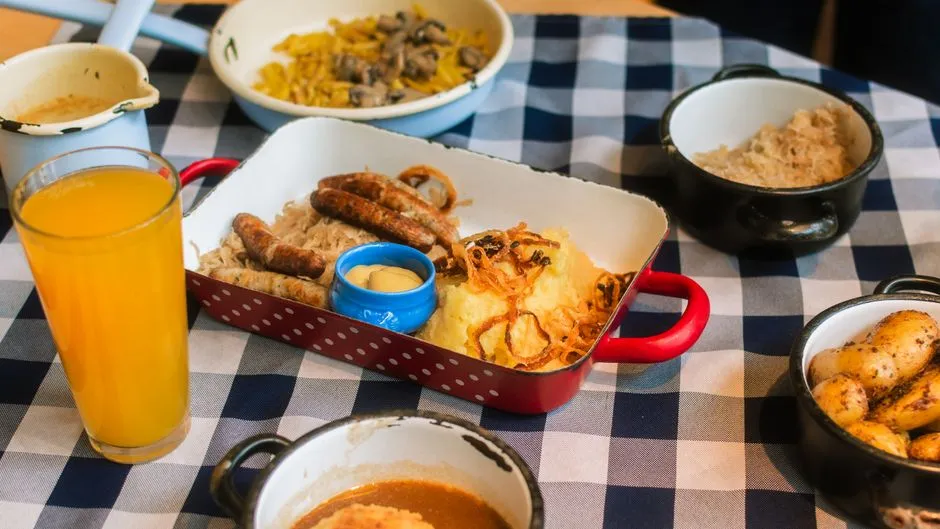
- Onion gravy needs time more than tricks
- Ingredients for about 3 cups
- Slice onions evenly
- Soften before you brown
- Cook the flour in the fat
- Add stock in stages
- Adjust thickness accurately
- Choose stock for the plate
- Make pub-style gravy in the sausage pan
- Turn it into mushroom-onion gravy
- Make it ahead without a skin
- What belongs underneath it
- The ratio worth remembering
- Sources
Onion gravy needs time more than tricks
This pub-style onion gravy makes about 3 cups (720 ml), enough for six generous servings. Four onions cook slowly until deep amber, flour thickens the fat, and stock turns the pan into a glossy sauce with actual onion texture.
Allow about 50–65 minutes, plus slicing and measuring. Most of that is gentle browning, not vigorous stirring. High heat can blacken onion edges while the centres remain sharp; low heat without patience can produce beige soup. Medium-low heat and attention in the final ten minutes land between them.
The recipe uses beef stock for classic depth, but vegetable or chicken stock works. A vegetarian version needs vegetarian Worcestershire sauce or the soy-and-balsamic alternative listed below, because some Worcestershire sauces contain fish ingredients such as anchovy; check the exact bottle.
Ingredients for about 3 cups
- 4 medium yellow onions, 1⅓ lb (600 g) after trimming
- 3 tbsp (43 g) unsalted butter
- 1 tbsp (15 ml) neutral oil
- ½ tsp fine salt, plus more to taste
- ¼ tsp black pepper
- ¼ cup (30 g) all-purpose flour
- 3 cups (720 ml) warm unsalted or low-sodium beef stock
- 1 tbsp (15 ml) Worcestershire sauce
- 2 tsp Dijon mustard
- 1 tsp dried thyme, or 1 tbsp fresh thyme leaves
- 1 tsp balsamic vinegar, plus more only after tasting
For vegetarian gravy, use vegetable stock and a vegetarian-labelled Worcestershire sauce. Alternatively, replace the Worcestershire with 2 teaspoons soy sauce plus 1 teaspoon balsamic vinegar; then omit the separate teaspoon of balsamic until the final tasting.
For vegan gravy, also replace butter with plant-based butter suitable for cooking or with another 3 tablespoons (45 ml) oil. Check every label for allergens. Check the labels on stock, Worcestershire, mustard, soy sauce, and plant-based butter for declared allergens.
Slice onions evenly
Halve each onion through the root, peel it, and slice from pole to pole into pieces about ¼ inch (6 mm) thick. Pole-to-pole slices hold their shape better than thin half-moons cut across the equator, giving the finished gravy soft ribbons rather than onion confetti.
Exact geometry is optional; even thickness is not. Very thin pieces can burn while thick pieces remain firm. If using a mandoline, follow its guard instructions and stop before the onion becomes too small to hold safely.
Use a 12-inch skillet or a wide 3-quart saucepan. Crowded onions release plenty of moisture, but the wide surface lets it evaporate and encourages even browning.
Soften before you brown
Melt the butter with the oil over medium heat. Add the onions and ½ teaspoon salt. Toss until coated, then cook for 8–10 minutes, stirring every few minutes, until the onions collapse and release liquid.
Lower the heat to medium-low. Cook for another 25–35 minutes. Stir every 4–5 minutes at first, then every 1–2 minutes as colour develops. Scrape the pan bottom each time.
The onions should become deep amber and taste sweet, with no raw crunch. They do not need to reach the mahogany colour of a long French onion soup base. The gravy will darken further when stock and seasoning arrive.
If the pan develops dark brown—not black—patches before the onions are ready, add 1 tablespoon water and scrape them loose. Repeat as needed. The water dissolves fond and evaporates. If patches are black and smell acrid, do not stir them through; move the onions to a clean pan and leave the burnt layer behind.
Do not add sugar to force colour. Onions contain enough natural sugar, and added sweetness can make the finished gravy taste like a misplaced chutney.
Cook the flour in the fat
Sprinkle the flour over the browned onions. Stir continuously for 2 minutes over medium-low heat. Every visible dry streak should disappear, and the flour should smell lightly toasted rather than raw.
This step disperses flour in fat before water arrives. If dry flour meets the full volume of stock at once, it forms lumps with damp exteriors and powdery centres—the culinary equivalent of refusing introductions.
Warm stock blends more smoothly, but it need not boil. Heating it in a small saucepan or microwave-safe jug also prevents the pan temperature from dropping dramatically.
Add stock in stages
Pour in about ½ cup (120 ml) warm stock while stirring or whisking. It will tighten into a thick paste. Add another ½ cup and stir smooth. Continue in roughly ½-cup additions until all 3 cups are incorporated.
Stir in Worcestershire sauce, Dijon, thyme, black pepper, and balsamic vinegar. Bring to a gentle simmer over medium heat, then lower the heat and cook uncovered for 12–15 minutes. Stir every few minutes, reaching the corners of the pan.
The gravy should coat the back of a spoon while still pouring easily. Draw a finger through the coating on the cool side of the spoon; the path should remain distinct. Do not do this with a spoon straight from boiling gravy, and do not return a tasted spoon to the pan.
Taste. Add salt only now because stock and sauces vary. Add more pepper if wanted. If it tastes flat rather than insufficiently salty, add balsamic vinegar ¼ teaspoon at a time. Acidity should sharpen the gravy without making it taste pickled.
Adjust thickness accurately
If the gravy is too thin, simmer it uncovered for another 3–8 minutes. Remember that it thickens as it cools. Reduction also concentrates salt, so taste again before seasoning.
If it is too thick, whisk in warm stock or water 1 tablespoon at a time. Stop when it pours in a broad ribbon. Adding a cup at once turns a small adjustment into a new recipe.
If it has flour lumps, pass it through a fine-mesh sieve. This removes some onion texture but preserves dinner. An immersion blender makes a smooth gravy; blend only part if you want body while keeping visible ribbons.
If an oily film appears, the flour may not have captured all the fat or the gravy may be simmering too hard. Lower the heat and whisk firmly. If needed, spoon off excess fat after the gravy settles for a minute.
Choose stock for the plate
Beef stock creates the darkest, most traditional partner for sausages, mash, roast beef, or the stout-braised beef pie. Choose an unsalted or low-sodium version so reduction does not over-season it.
Chicken stock produces a lighter brown gravy that suits roast chicken, pork, meatballs, or vegetable mash. It still needs a full onion browning stage; pale stock is not permission to rush.
Vegetable stock varies widely. A mushroom-forward version supports depth, while a very carrot-heavy stock can become sweet alongside the onions. Taste the stock before using it. If it is strongly salted or flavoured with herbs, reduce the added thyme and hold all extra salt until the end.
Homemade stock may contain gelatin and thicken more when chilled. Judge serving consistency while hot, then expect leftovers to set firmly.
Make pub-style gravy in the sausage pan
This recipe needs no drippings. For bangers and mash, clean brown fond and measured sausage fat can deepen it without changing the formula.
Cook sausages according to their label and verify the centre with a thermometer. The FoodSafety.gov chart lists 160°F (71°C) for ground-meat sausage and 165°F (74°C) for poultry sausage. FoodSafety.gov guidance: hold sausages at 140°F (60°C) or warmer, or refrigerate within two hours—one hour above 90°F (32°C). Reheat chilled sausages to 165°F (74°C).
Pour the pan liquid into a heatproof separator or bowl. Measure the usable fat, then add butter and oil to reach the original four tablespoons total. Count defatted cooking liquid within the measured 3 cups (720 ml) stock.
Keep brown fond; discard black or acrid residue. Brown the same 600 grams onions in the measured fat, loosen the fond with some stock, then use the same 30 grams flour and remaining stock. Choose unsalted stock and season after reduction because the sausage, fond, and juices may contain salt.
Turn it into mushroom-onion gravy
For mushroom gravy, use 8 oz (225 g) cremini mushrooms, sliced ¼ inch thick. Brown them before the onions:
- Heat 1 additional tablespoon (15 ml) neutral oil over medium-high.
- Add mushrooms in one layer and cook for 6–8 minutes until their liquid evaporates and edges brown.
- Transfer to a plate.
- Add the recipe's butter and oil, brown onions as written, then return mushrooms before adding flour.
Keep the flour and stock quantities unchanged. Mushrooms release water during browning, but it should evaporate before the gravy stage. Adding raw mushrooms with the stock dilutes flavour and gives them a boiled texture.
For a peppercorn variation, add 1–2 teaspoons coarsely crushed black pepper with the thyme. Begin with one teaspoon; pepper becomes louder during reduction.
Make it ahead without a skin
Divide gravy among shallow containers, cover, and refrigerate promptly. After chilling, clean reusable wrap or parchment touching the surface can prevent a skin. Use within three to four days.
The USDA leftover guidance says to refrigerate leftovers within two hours—one hour above 90°F (32°C)—and reheat them to 165°F (74°C). In a saucepan, stir gravy to a rolling boil and verify 165°F in the centre. Thin with stock or water 1 tablespoon at a time.
Check temperature in the centre and stir before measuring again, because thick sauces heat unevenly. Do not repeatedly cool and reheat the whole batch. Portion what you need.
Gravy can be frozen for one to two months for best texture. Thaw in the refrigerator, stir the gravy to a rolling boil, and verify 165°F (74°C) in the centre. Flour-thickened gravy may look slightly separated after freezing but usually comes back together with heat and a splash of stock.
What belongs underneath it
For bangers and mash, use safely cooked sausages appropriate to their meat type and spoon gravy over hot mashed potatoes. Ground-meat sausages generally require a higher minimum temperature than whole cuts; follow the package and current government chart, using a thermometer.
For a vegetarian plate, roast mushrooms, cabbage wedges, or a vegetable loaf and use vegetable-stock gravy. For chips, serve gravy according to preference. The beer-battered fish and chips recipe uses lemon and vinegar so its crust stays crisp.
Finish with sticky toffee pudding, whose sauce is sweet and onion-free.
The ratio worth remembering
For a pourable onion gravy, remember 3 tablespoons butter plus 1 tablespoon oil, ¼ cup flour, and 3 cups liquid, built around 1⅓ pounds of slowly browned onions. Brand strength and evaporation still require adjustment, but the ratio gives you a dependable starting point.
Brown the onions fully. Cook the flour. Add stock gradually. Simmer to the spoon-coating stage. Season after reduction. Those steps are not flashy, which is excellent news: dinner already has enough personalities.